
Power Flushing

Restore Your Heating System’s Performance
If your radiators aren’t heating properly or your system isn’t performing as it should, a power flush can help restore efficiency and improve circulation.
Not every system requires a power flush — proper diagnosis is essential.
We assess your system first and only recommend a power flush where it will provide a clear, worthwhile benefit.
Includes a full system assessment and clear professional recommendations.
Subject to Terms & Conditions.
Is Your Heating System Showing These Signs?
You don’t need to guess — these are the most common signs we look for when assessing whether a system may benefit from a power flush.
These are all signs that sludge or debris may be restricting circulation within your heating system — but proper diagnosis is always needed before deciding on the right solution.
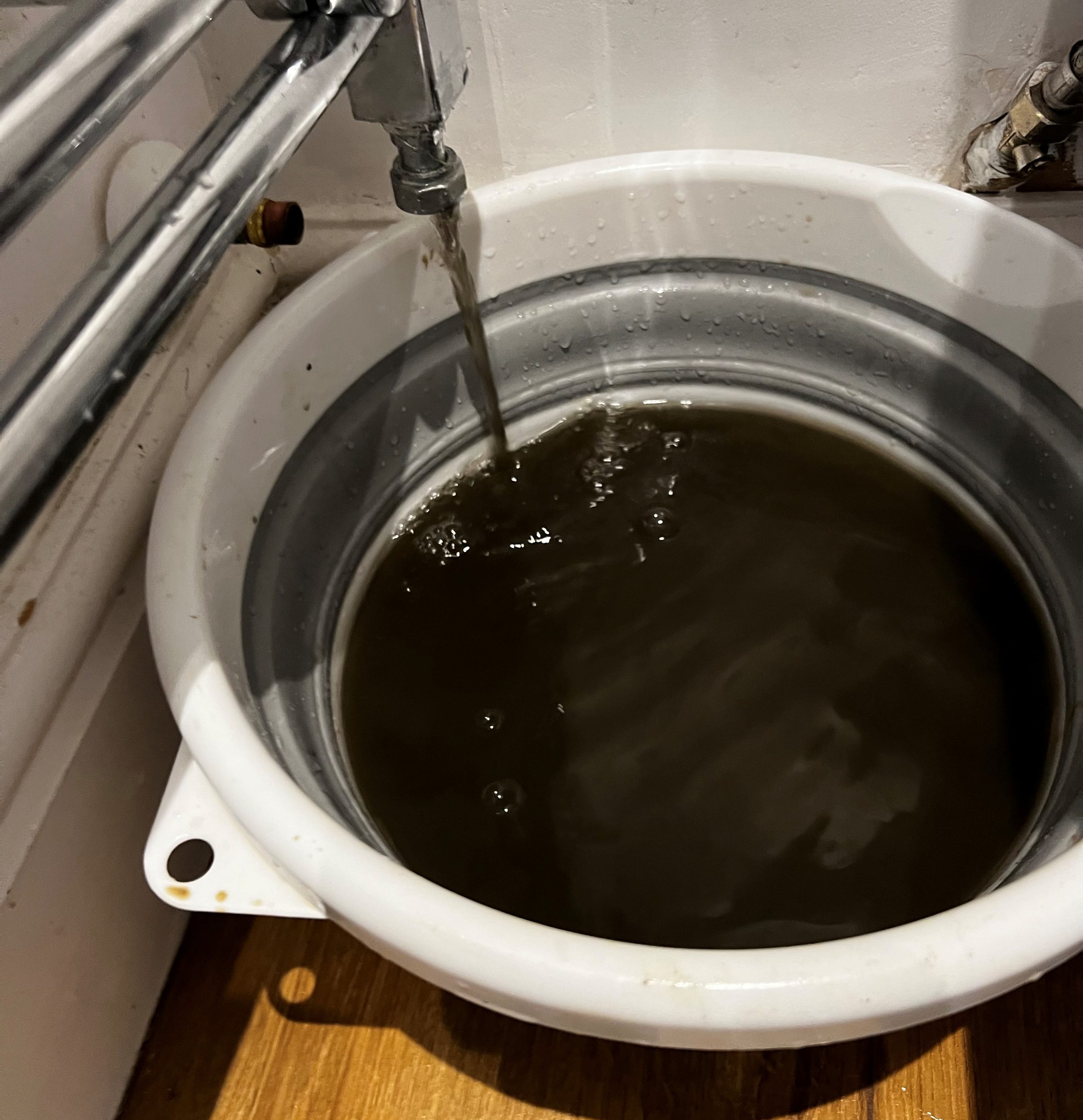
Not Sure If Your System Needs a Power Flush?
Every system is different. We assess your heating system first to determine whether a power flush is the right solution and provide clear, honest recommendations.
What Is Power Flushing?
Over time, heating systems naturally collect debris such as sludge, rust and scale. This occurs as water circulates through metal components within the system.
This build-up can restrict water flow, reduce heat output and place additional strain on your boiler and system components.
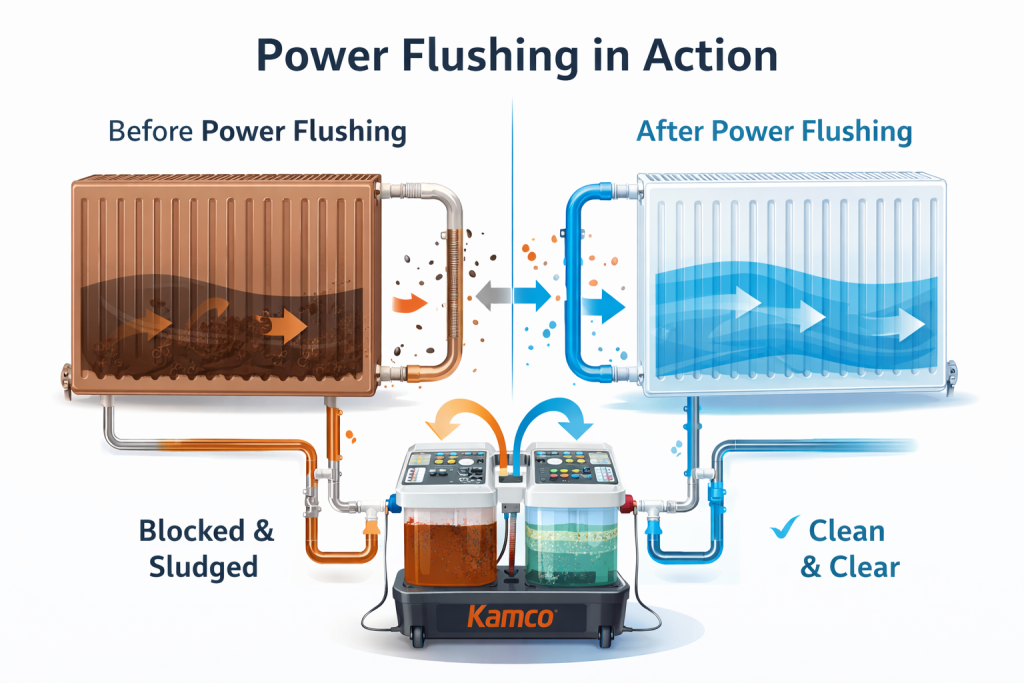
A power flush uses specialist equipment to circulate water at high velocity through the system, helping to remove this build-up and restore proper circulation.
This can help improve efficiency, restore heat distribution and support the long-term reliability of your heating system — when it is the right solution for your system.
When Power Flushing Is Recommended — and When It Isn’t
Every heating system is different — the right solution depends on its condition and performance.
When Power Flushing May Be Recommended
Power flushing is not always required.
It is typically recommended where there are clear signs that the system is restricted or not performing as it should.
When Power Flushing May Not Be Necessary
In many cases, a power flush is not required.
If your heating system is working efficiently and shows no signs of restriction, other solutions may be more appropriate.
We always assess your system first and only recommend a power flush where it will provide a clear and worthwhile benefit.
How Power Flushing Is Assessed and Carried Out
Every power flush begins with a full system assessment to determine whether it is the right solution for your heating system.
Where a power flush is suitable, specialist equipment is used to safely clean and restore the performance of your system.
Process Steps → What Happens During Your Appointment
If a power flush is not suitable, we will provide clear recommendations and next steps instead.
In some cases, cleaning an older or heavily affected system may highlight existing weaknesses, such as small leaks that were previously hidden.
Where this occurs, we will explain the situation clearly and advise on the best way forward.
Our approach is always to work carefully, explain everything clearly, and ensure your system is left operating safely and efficiently.
All services are subject to Terms & Conditions.
Protecting Your System After Cleaning
After a power flush, it’s important to keep your system clean and protected going forward.
In many cases, we may recommend additional measures such as installing a magnetic filter (e.g. MagnaClean) and adding a corrosion inhibitor.
These help capture ongoing debris and reduce future build-up — maintaining performance, improving reliability, and extending the life of your heating system.
We will advise you on the most appropriate options for your system.
Restore Your Heating System’s Performance
If your heating system isn’t performing as it should, we will assess the issue and recommend the right solution — clearly and professionally.
Includes a full system assessment and clear professional recommendations.
Subject to Terms & Conditions